
Performance Drivers
Not just what the firm earned. What is slowing it down.
Lock-up in days, split into time to bill and time to collect, so you know which one to fix.
What it measures
Where the days go between the work and the cash.
Time to bill
How long work sits before it becomes an invoice.
Time to collectSlower side
How long an invoice waits before it's paid.
One lock-up figure, start to finish
From a number of days to the work behind it.
The total.
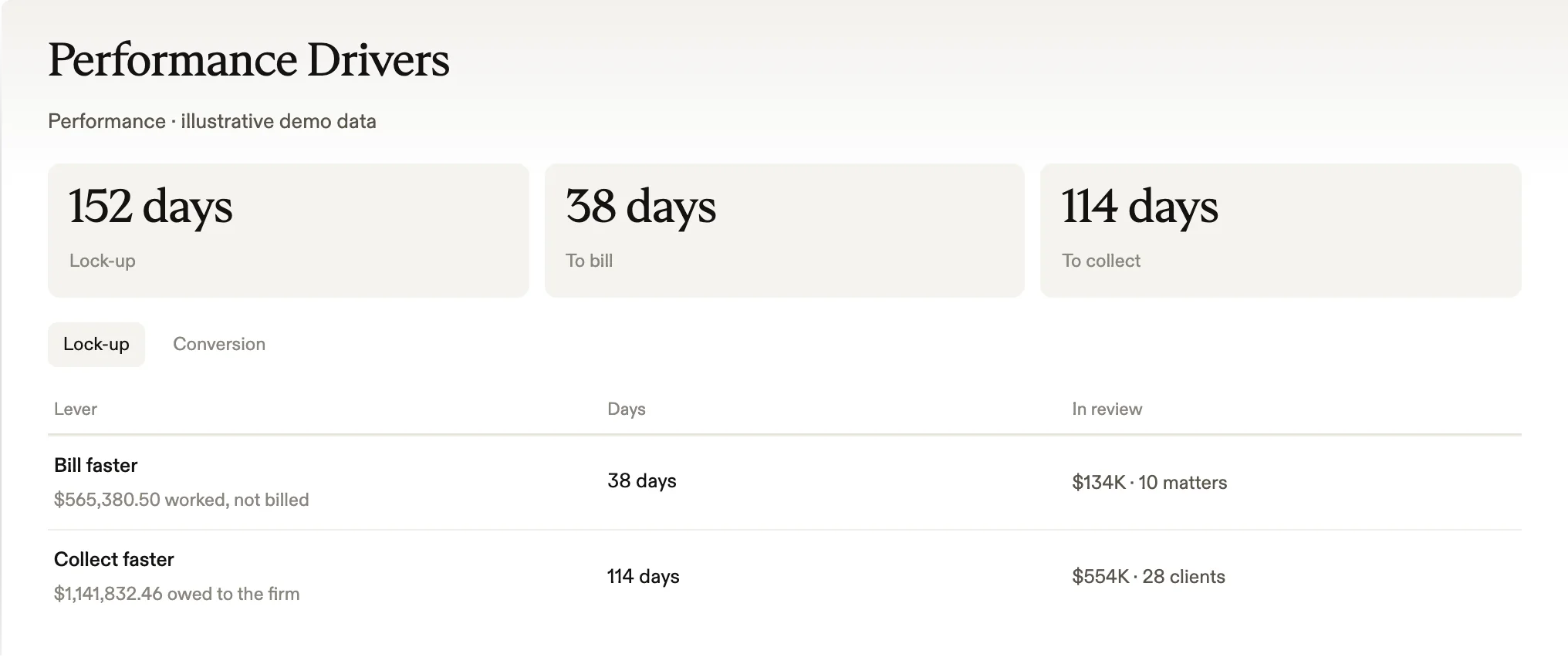
Lock-up is 152 days from work done to cash in.
152 daysThe split.
38 days to bill and 114 to collect. Collecting is the slower side.
38 + 114Where the days are.
By practice area, slowest first, and by fee earner.
Practice area · Fee earnerWhat to do.
Each side leads to the work to bill or the invoices to collect.
Bill · CollectBuilt for the question behind the numbers
Not just how long. Why, and where.
What a day is worth.
Roughly how much billing each day of lock-up is holding back.
Bill faster, or collect faster.
It shows which side is slowing the cash.
Honest about gaps.
If lock-up can't be calculated, it says so. A missing number is never shown as an all-clear.
Questions
What partners ask us about lock-up.
What is lock-up?
The time between doing the work and collecting the cash: days to bill plus days to collect.
Is it compared with other firms?
No. It shows your firm's own figures, by practice area and fee earner.
What if our data is incomplete?
It says so. A missing number is never shown as zero or as an all-clear.
Which systems does it work with?
FirmIntel works alongside your existing legal accounting and practice-management systems. We'll go through yours on a call.
Is cash coming in as fast as the work goes out?
See how long your work takes to become cash, and where it's stuck.
Book a demo